
Hearing Aid Repair & Maintenance
Proper Hearing Aid Care and Maintenance
Proper care and maintenance can extend the life of your hearing aid and can help maintain optimal performance while ensuring proper ear hygiene.
To avoid some common hearing aid problems, we will teach you how to properly clean and maintain your hearing aid. Proper cleaning can help to prevent earwax buildup and blockages, which can cause inconsistent hearing aid performance, or may not allow it to work at all.
Ensuring that you replace dead batteries will also ensure consistent hearing aid functions, without distorting sounds or having inconsistent performance.
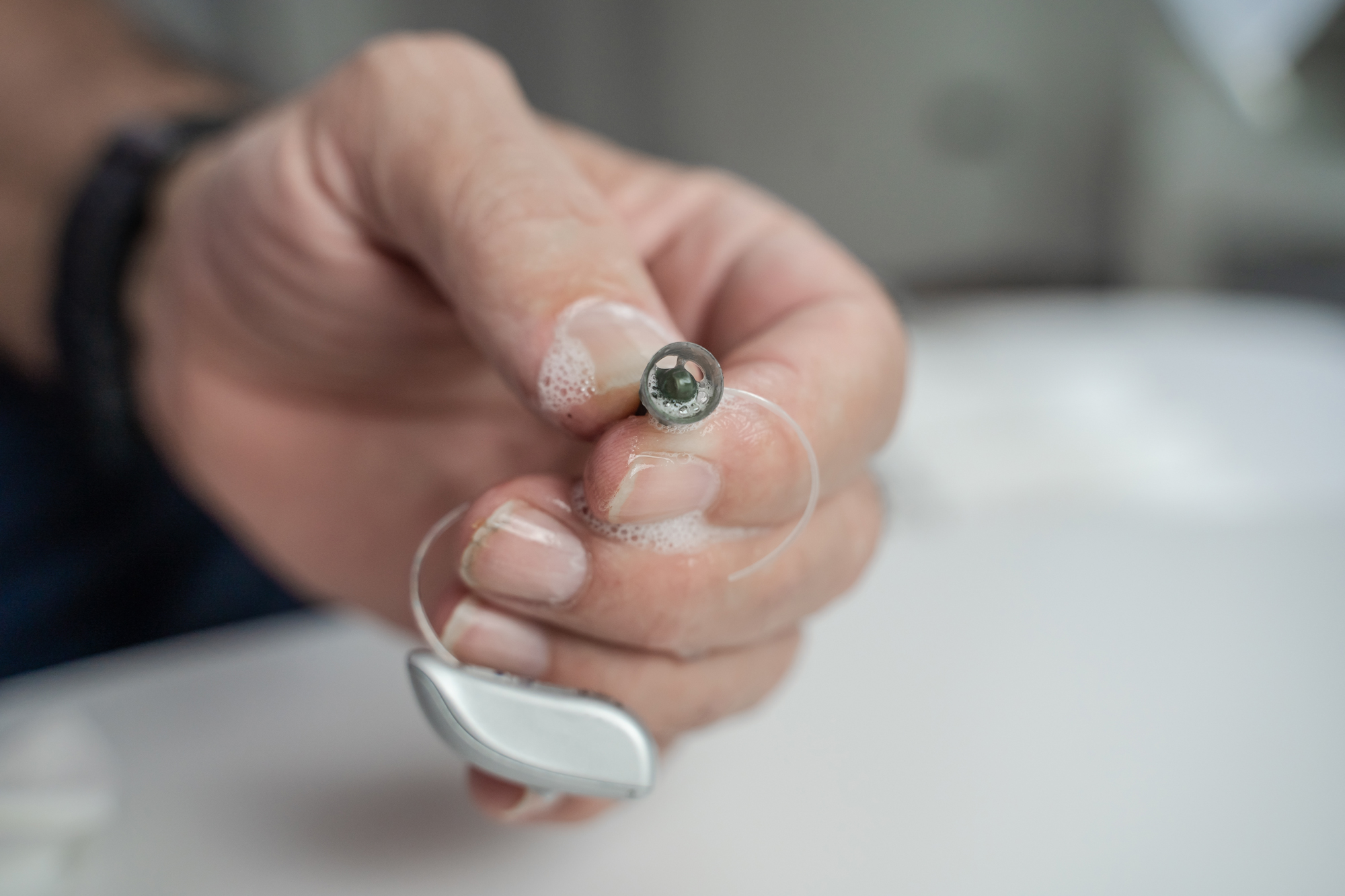
Sometimes, despite cleaning your hearing aids at home, earwax can become too hard to remove yourself.
Bring your hearing aids in to our office for a free cleaning; we have specialized equipment including an ultrasonic cleaning tool and vacuum to get your hearing aid clean and to ensure it is working at maximum capacity.
Signs Your Hearing Aids Need Repairs
Hearing aids are designed to provide reliable support, but like any device, they can experience wear or technical issues over time. One of the first signs something might be wrong is a noticeable drop in sound quality, like static, distortion or intermittent sound. You may also hear unusual feedback or whistling that wasn’t there before. Paying attention to these changes early can help you avoid more serious problems later.
Other signs that your hearing aids need attention might not be as obvious. Difficulty changing programs, buttons that no longer respond properly or batteries that drain faster than usual can all indicate internal issues. Physical damage like cracks, loose parts or moisture exposure can also affect performance.
What Are the Most Common Repairs?
While some small problems can be managed at home, many hearing aid issues require professional attention. Common repairs include cleaning or replacing blocked microphones and receivers, fixing damaged tubing or earmolds and addressing internal electronic components that affect sound quality. Specialists have the tools and experience needed to handle these issues safely without risking further damage.
Visiting a professional promptly ensures that minor problems don’t develop into larger, more costly repairs. A hearing care specialist can also check the overall performance of your devices, recalibrate settings and make adjustments to match your hearing needs.